| Distance | Elapsed Time | Moving Time | Average Speed | Max Speed | Elevation Gain | Calories Burned |
|---|---|---|---|---|---|---|
|
270
km
|
11:07
hours
|
10:00
hours
|
26.96
km/h
|
43.52
km/h
|
187
m
|
4,292
kcal
|
👑🚢🌞Maastricht – Ternaaien – Schoten
11 August 2023
Lured by pretty pictures of the Tranchée de Caster I left home in the dark at 5:15 for the train to Maastricht. This is the place were the Albert Canal—coming from Liège—passes closely to the Meuse with only the Sint-Pietersberg and the lock of Ternaaien between them. A perfect starting point for a route following the canal over 120km, almost to its conclusion in Antwerp.
In the train the conductor asked me where I would ride my bike. When I told him the distance he related a story of the young Adri van der Poel doing a ride into France of 400km or more. That was the first time the name Van der Poel came up today—not even Mathieu mind you!
At 8 with the sun still low in the cool air I left beautiful Maastricht even though my heart shouted to stay. After 20 minutes I stood between the marl rocks looking south to the bridge of Lanaye (Ternaaien), and north in the direction of my route.
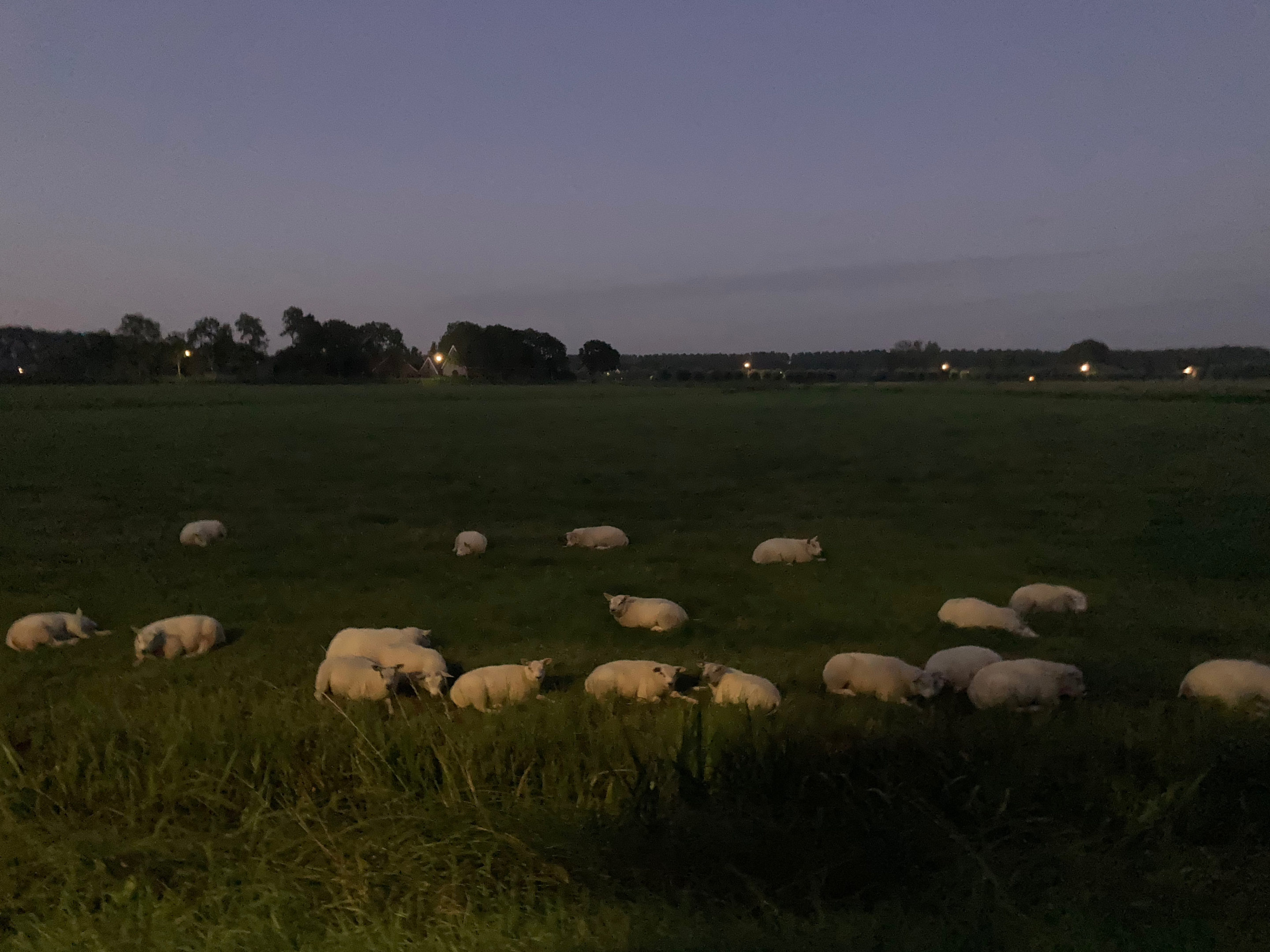
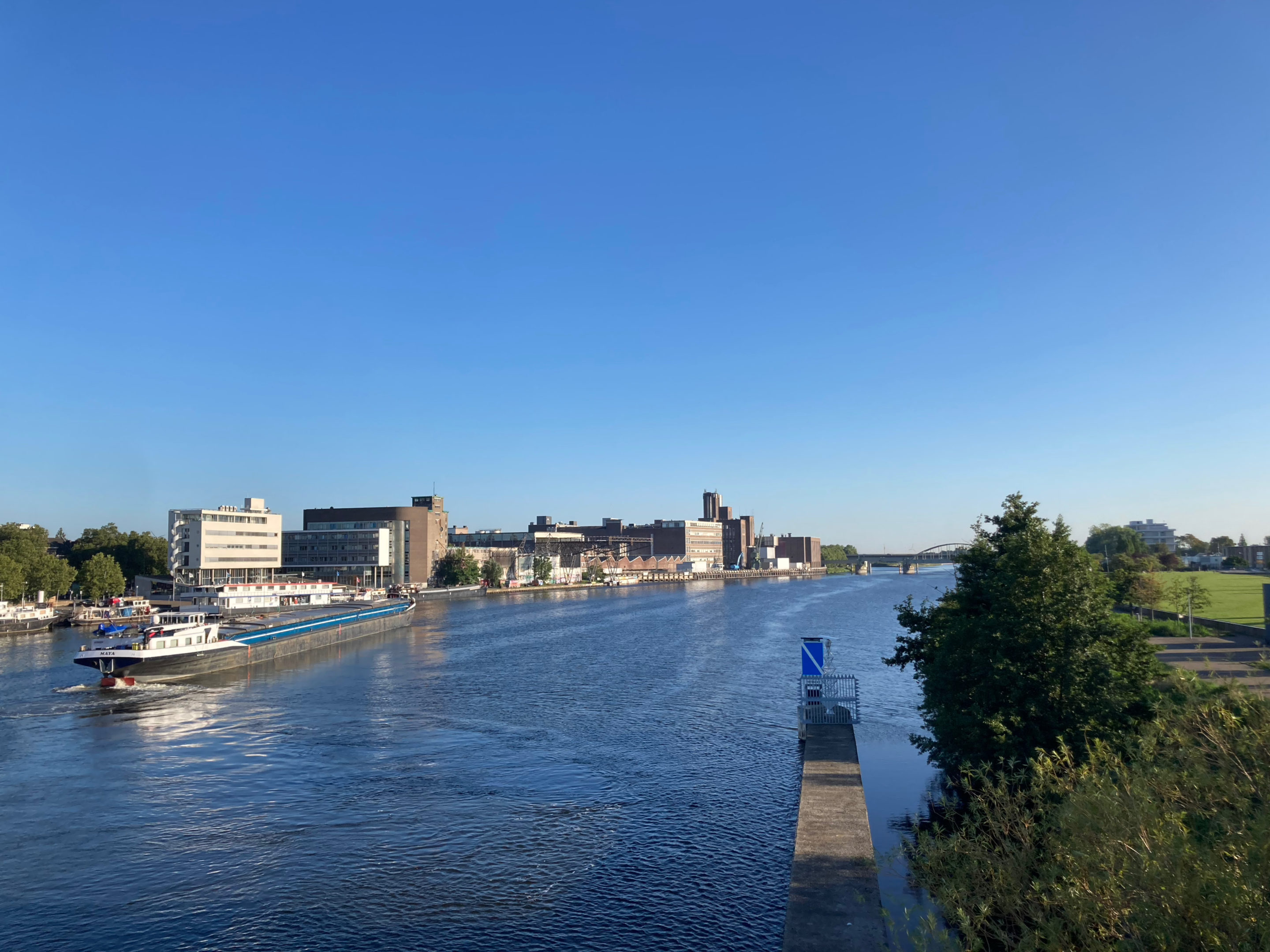
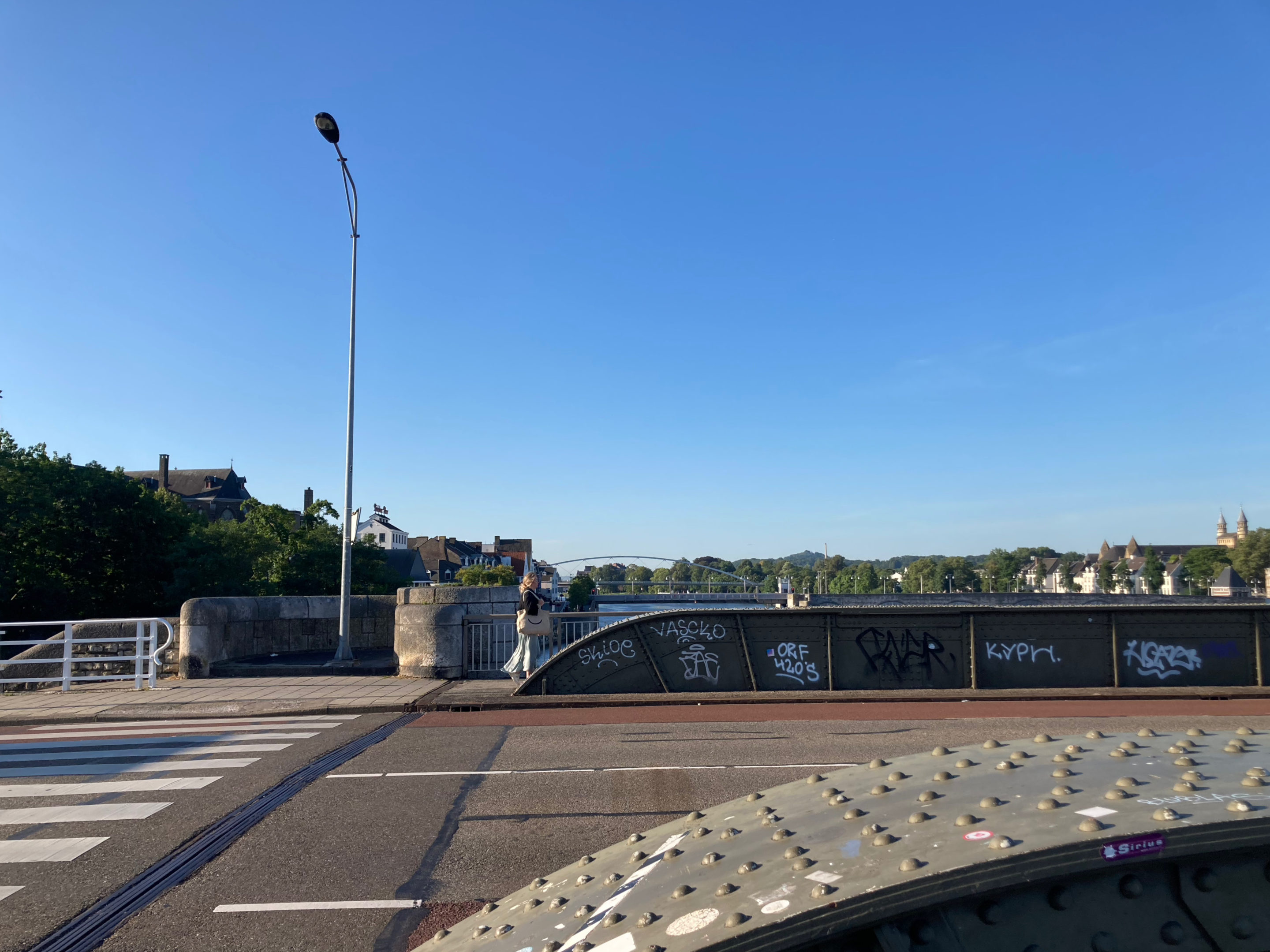
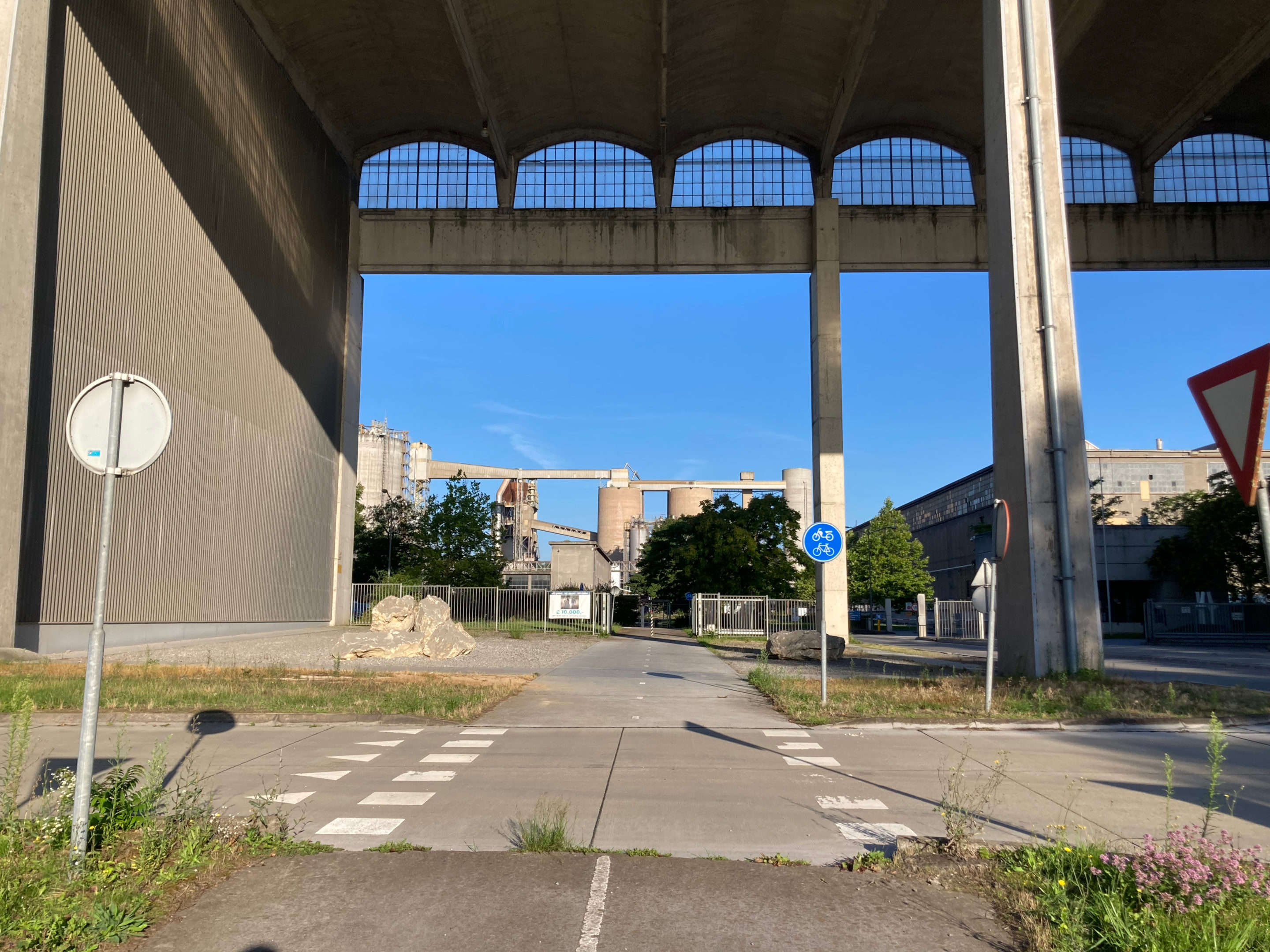
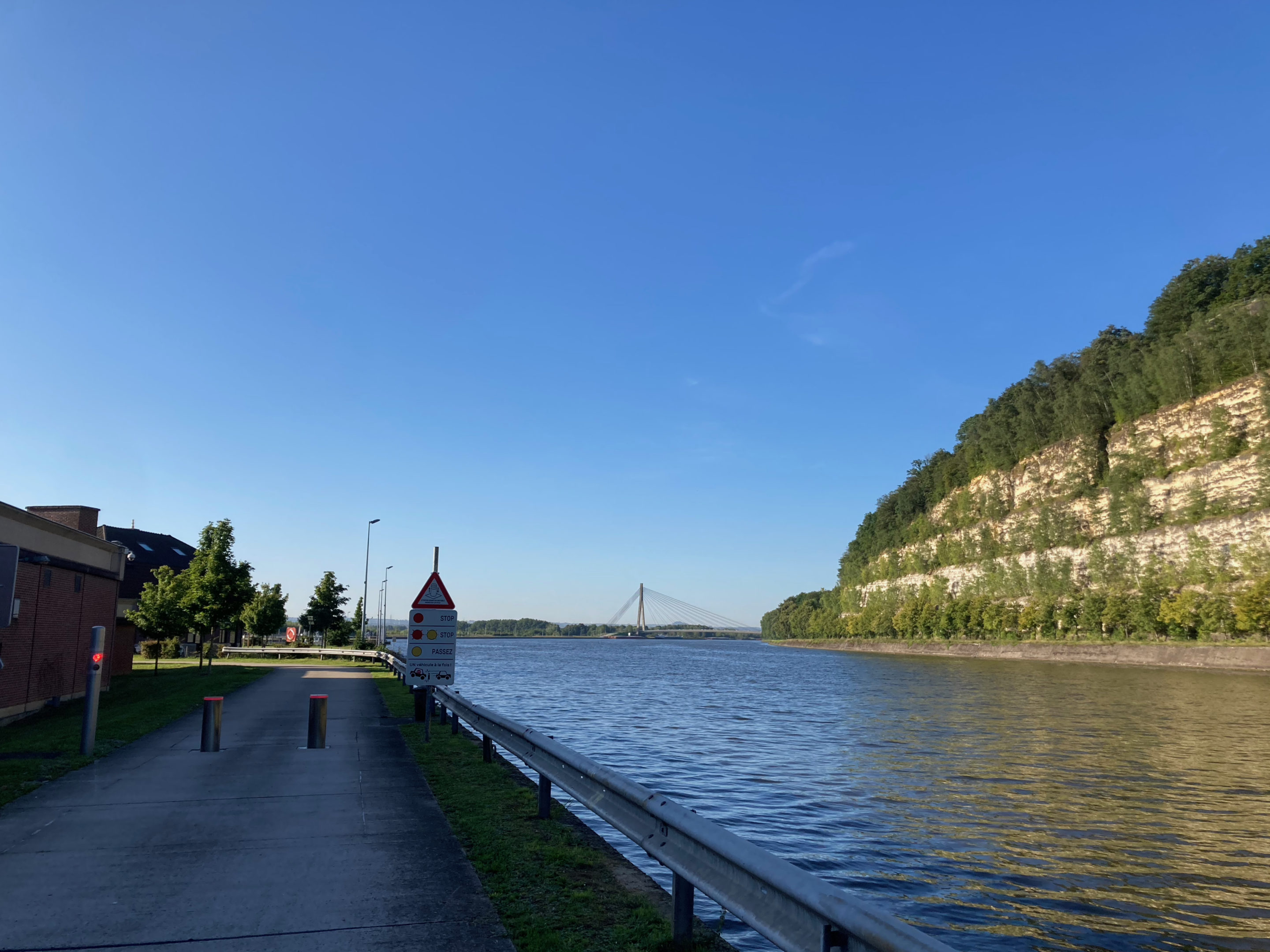
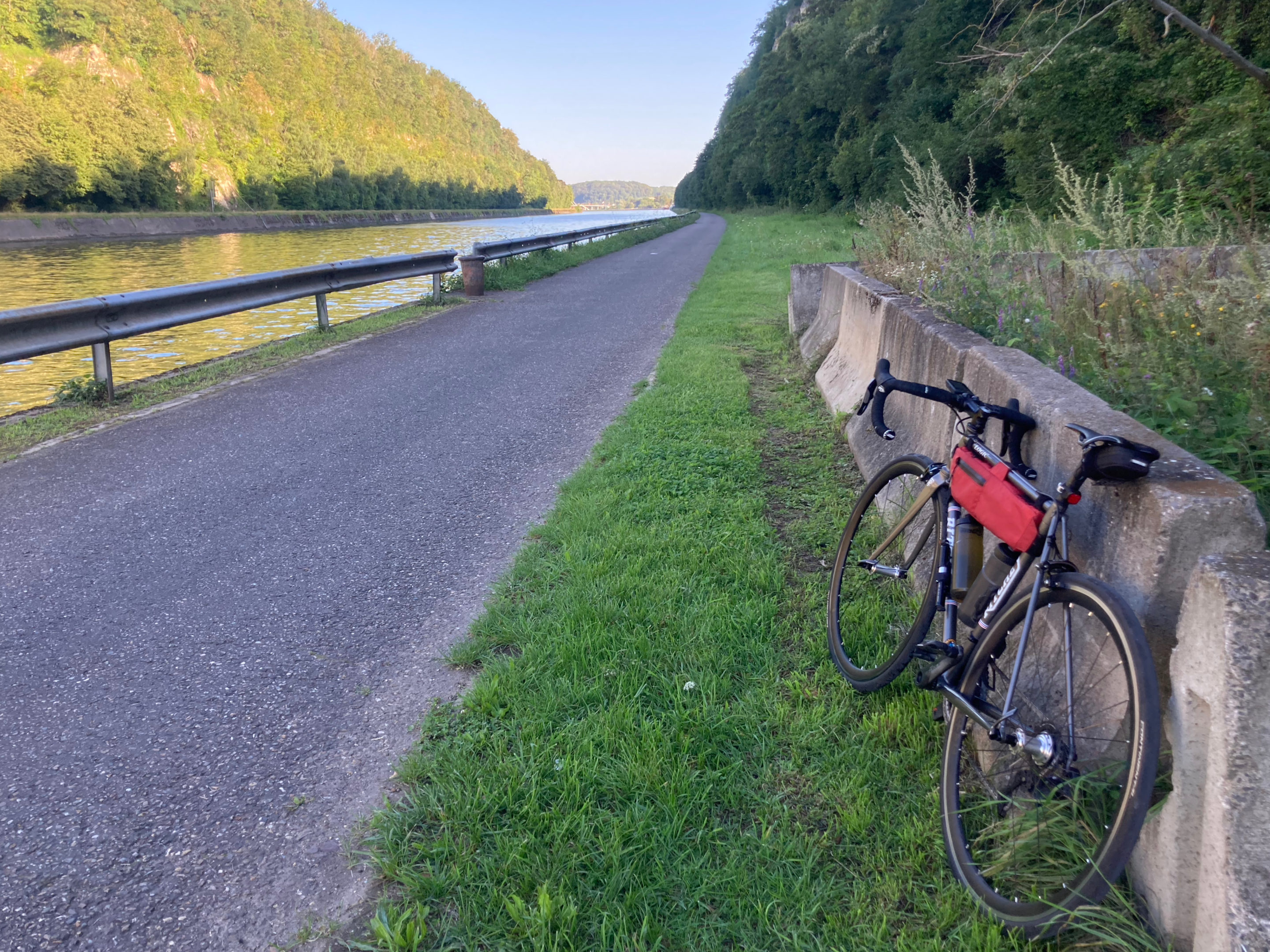
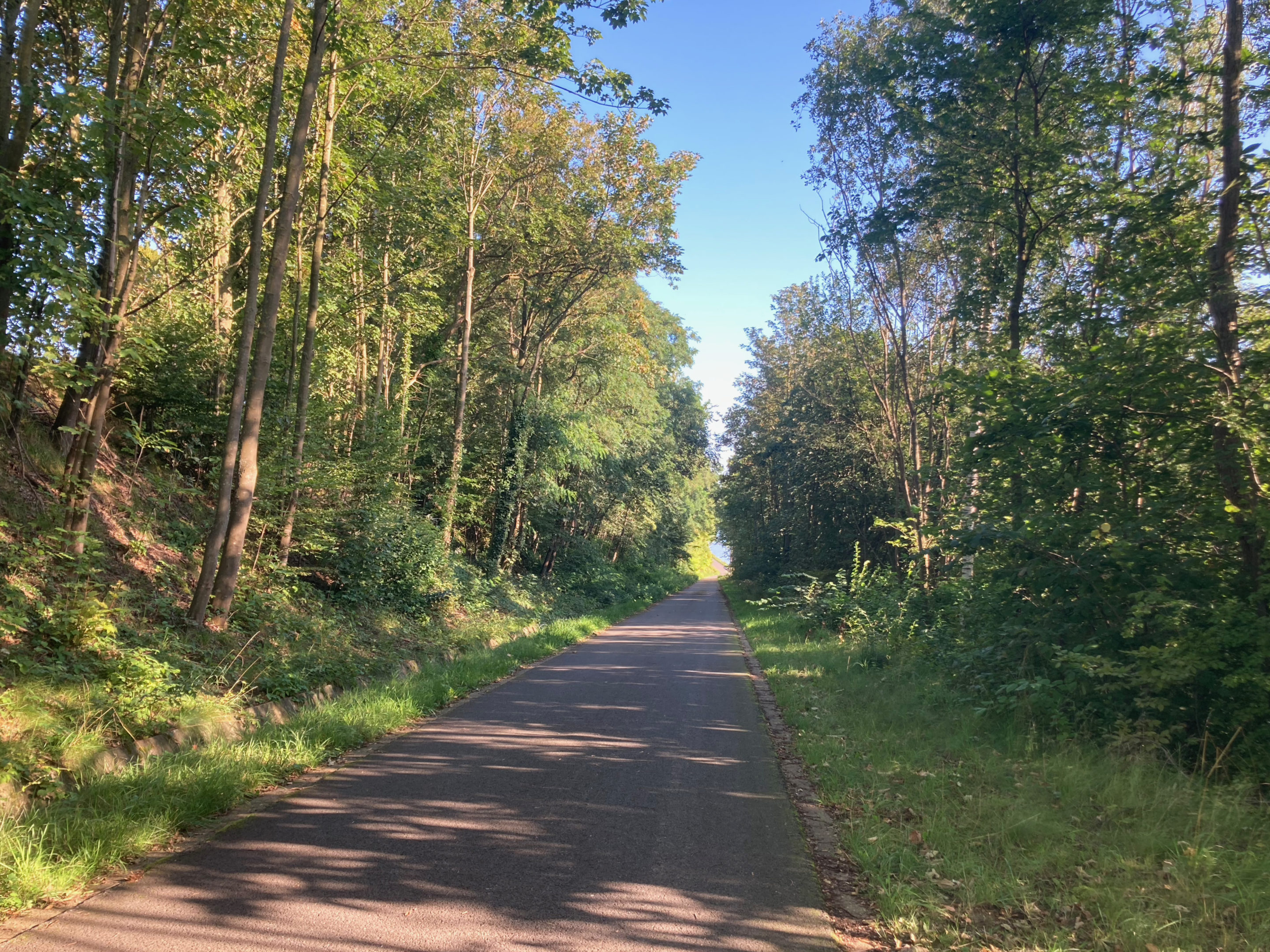
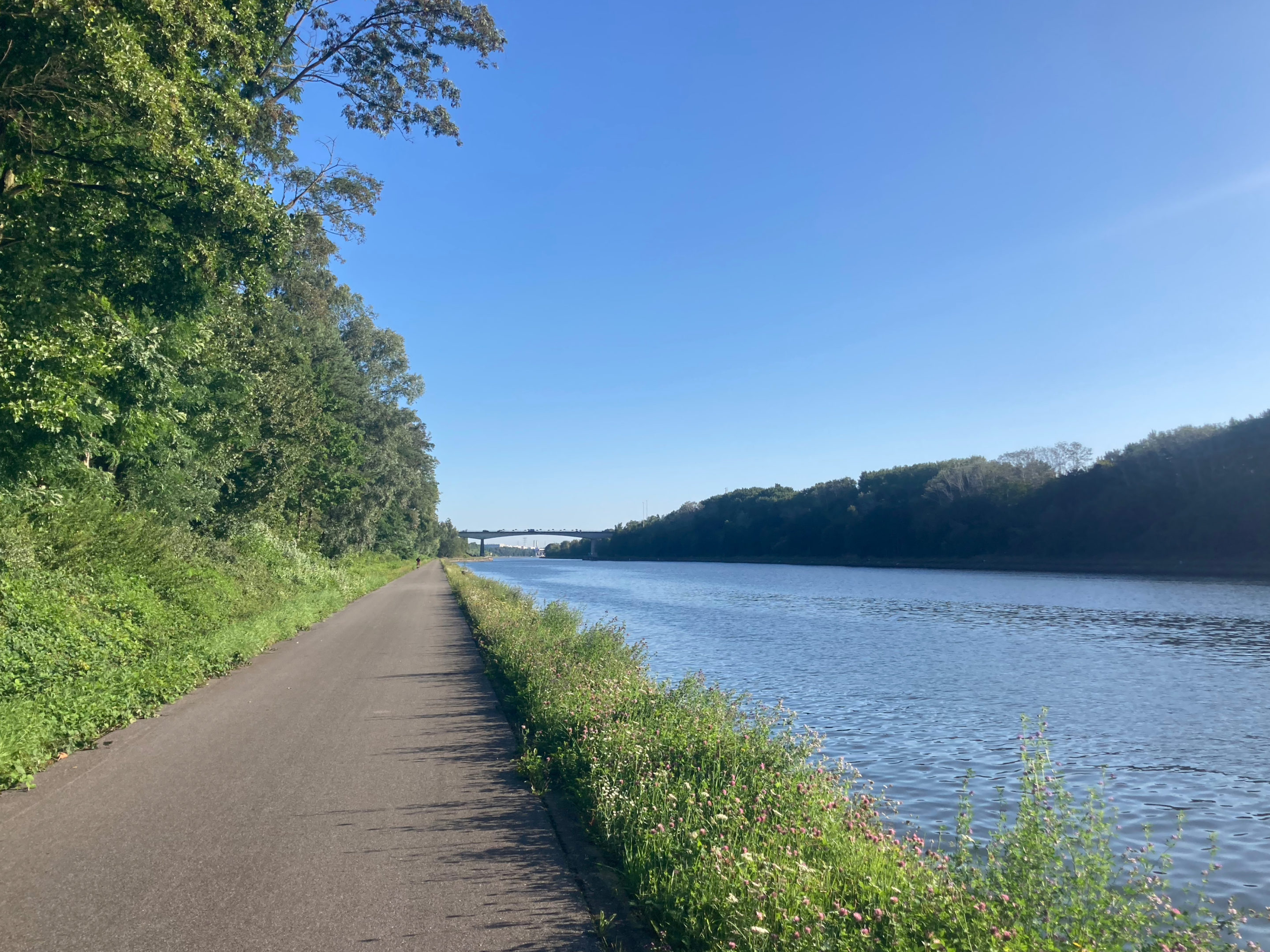
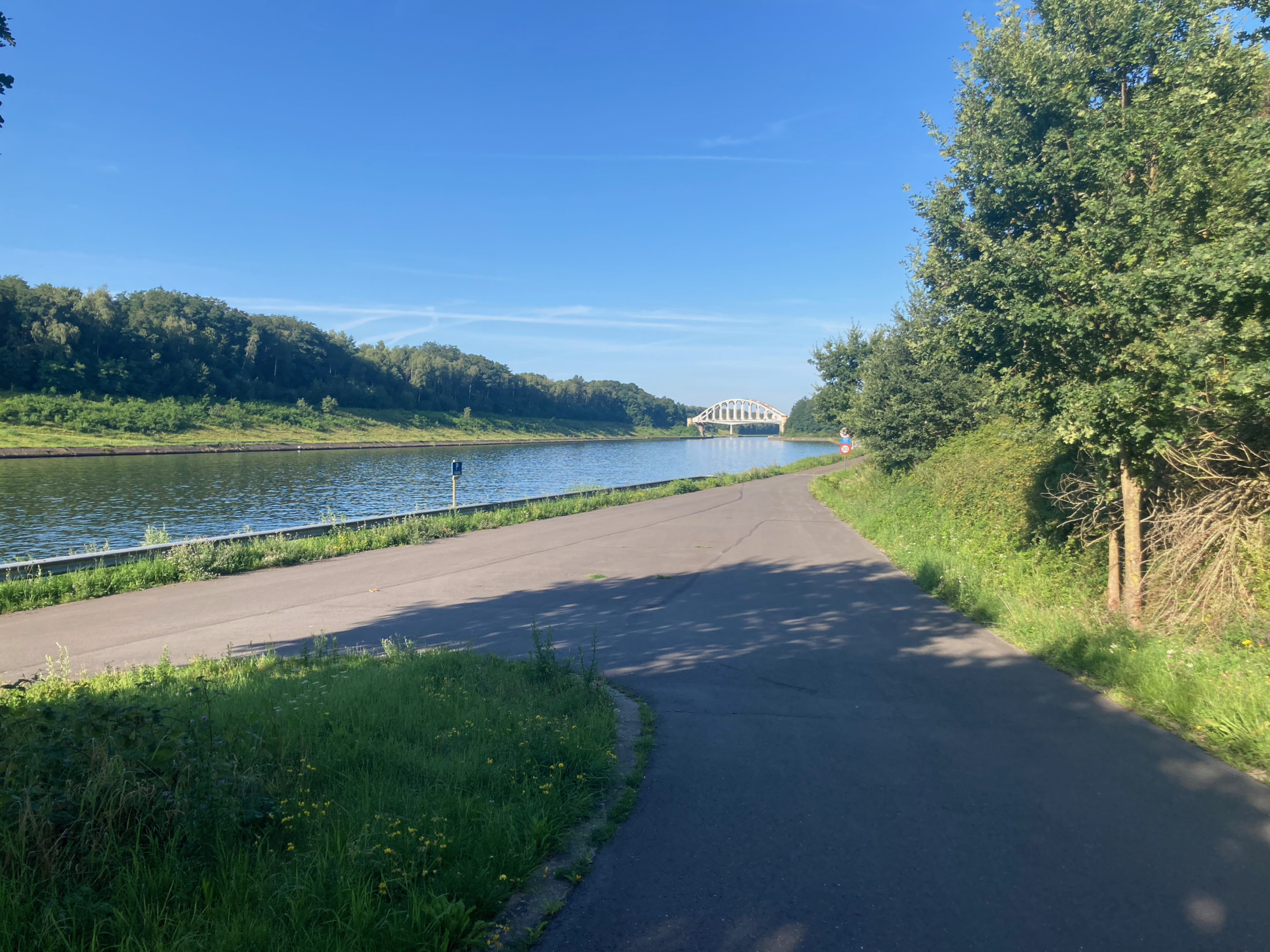
Along the canal lies a ‘jaagpad‘ (towpath) that is open for pedestrians, cyclists and mopeds. Many areas around the canal are of course industrial and as a result some sections of the jaagpad are closed off. The path itself is largely made of nice smooth asphalt. But the roads around it are not so smooth, and neither are the bike paths. Near Genk I had to make my first detour. The road surface was strewn with small sharp pebbles that conceivably fell from more than one lorry.
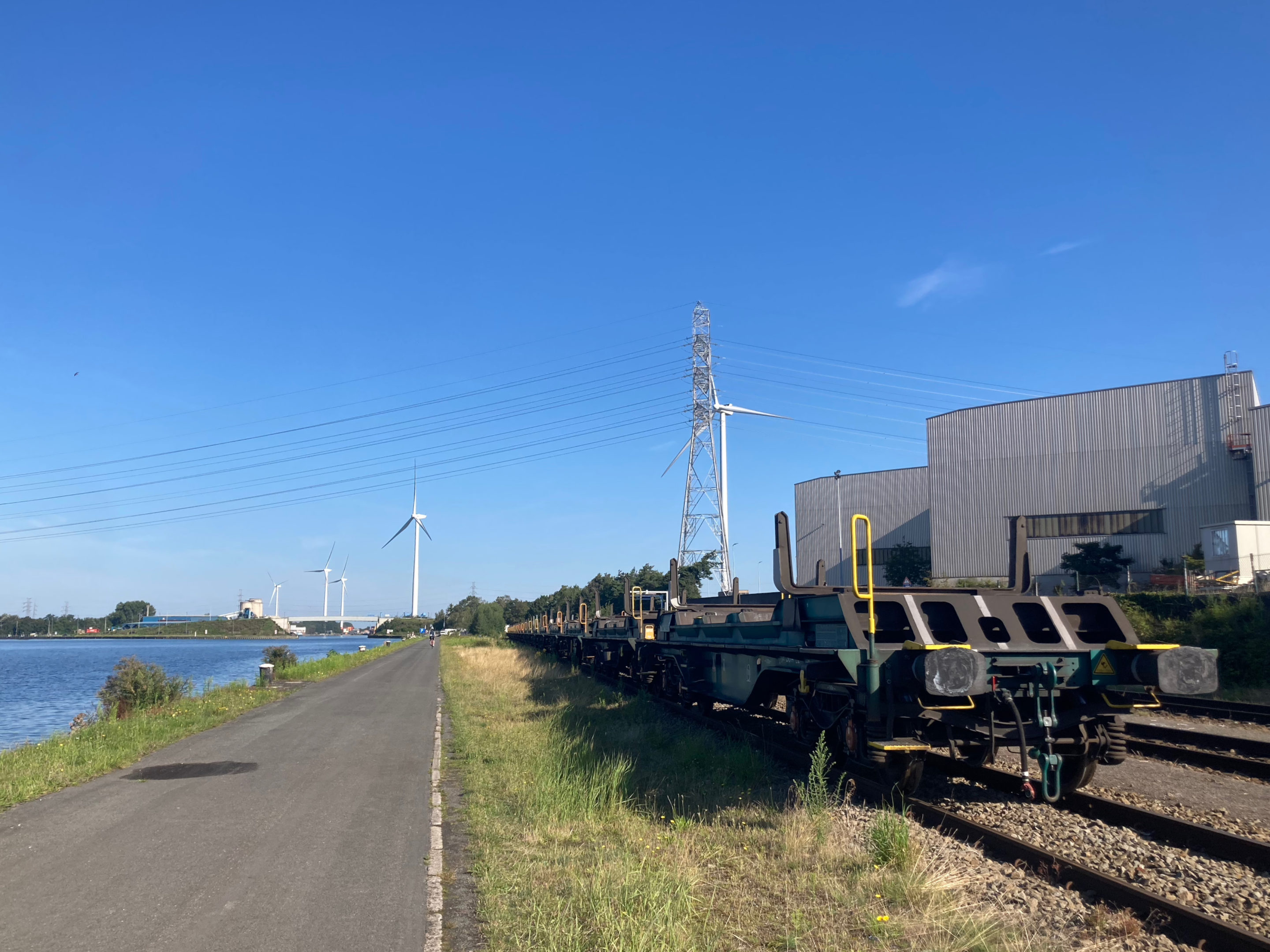
At the lock at Diepenbeek I stopped before a crossing. My pedal touched the kerb as I unclipped and I was passed by another cyclist when I looked down to check. In the downhill from the bridge level to the canal I caught up with him, and after staying in his wheel I took over and we took turns for some 10km until the bridge at Stokrooie. He revealed to me he had a race the day after and was doing a recovery ride. Then he told me a story of how he heard Adrie van der Poel’s brother did a ride between Hoogerheide and Maastricht and back. We pieced it together he must have gone for some pancakes. When I told him my destination he asked me if I was going to get some pancakes in Schoten. At the bridge he rode back home and we wished each other good luck. Pretty amazing that five days after Mathieu became world champion people are talking about his father and his uncle doing big rides.
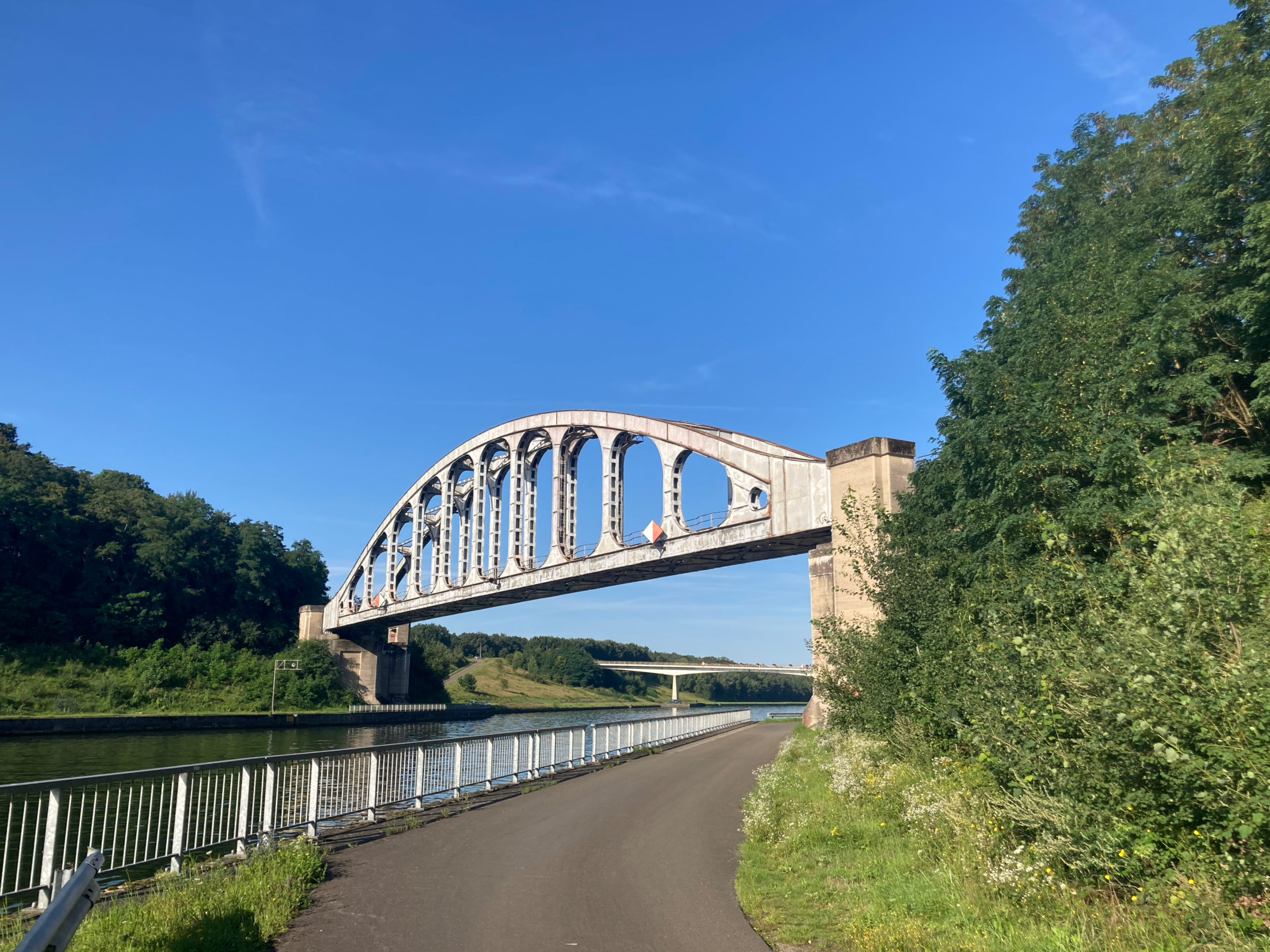
Not much later I would reach the bridge of Beringen that I crossed a fortnight ago. But not before I made another two detours in places where the jaagpad was closed: one planned and one calculated. Reaching the bridge I took a muffin break, pondering how all these canal bridges are so alike that it is difficult to tell one from the other.
After that there were two more unplanned detours between Beringen and Kwaadmechelen. The second one was longer and losing my patience a bit I decided to take a singletrack through the shrubs. I ended up hiking back to the canal, half carrying my bike in muddy places.
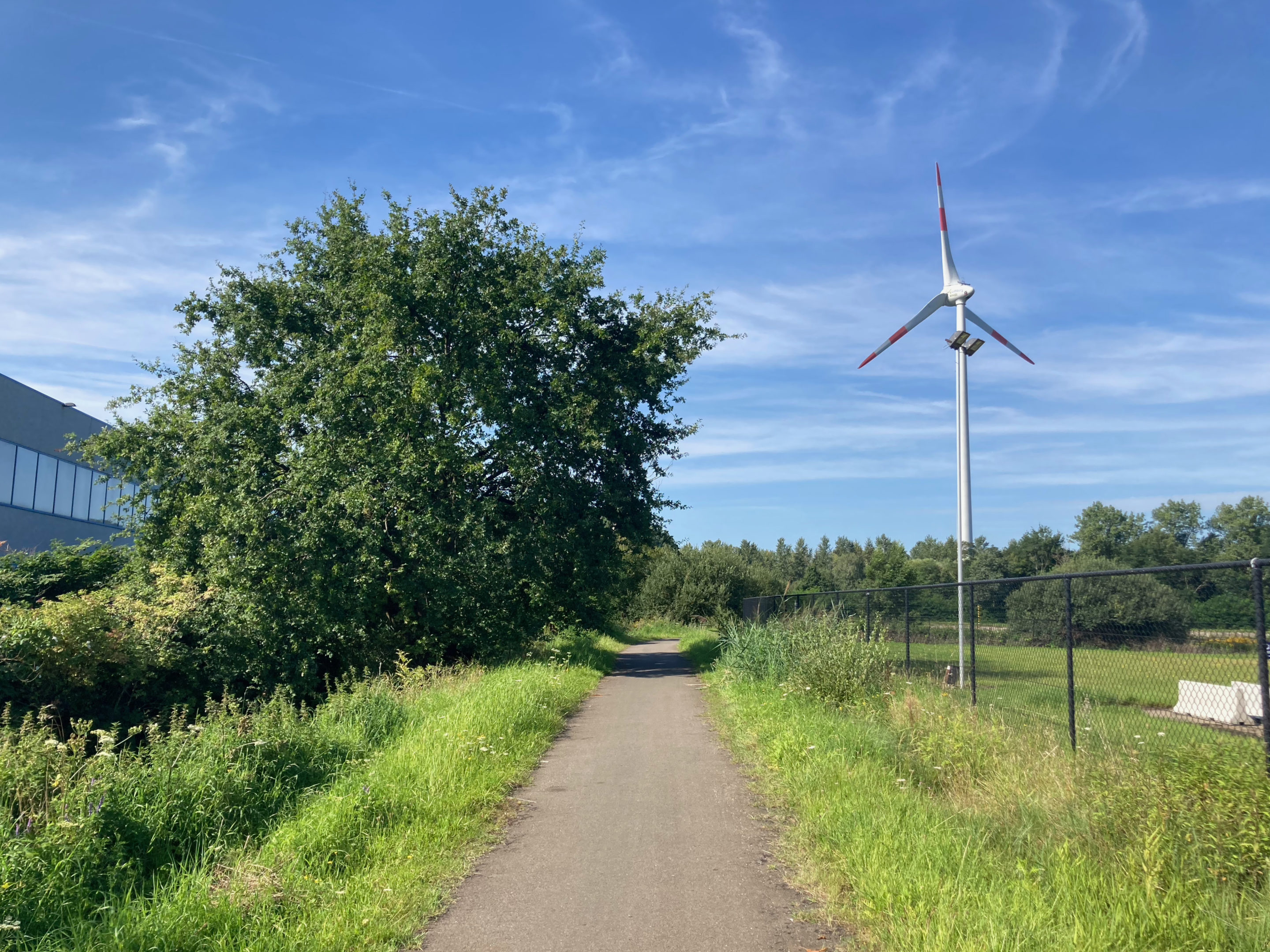
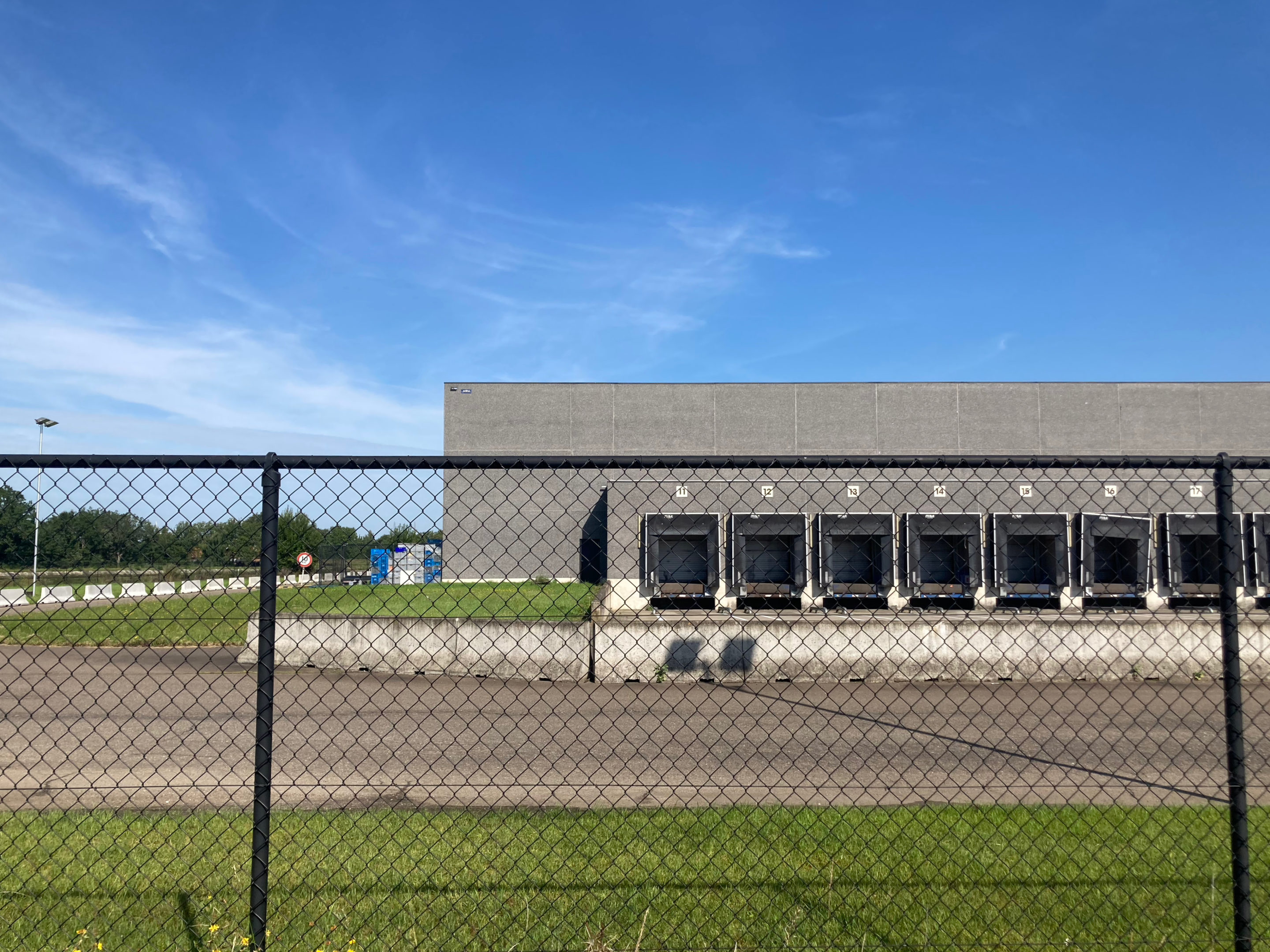
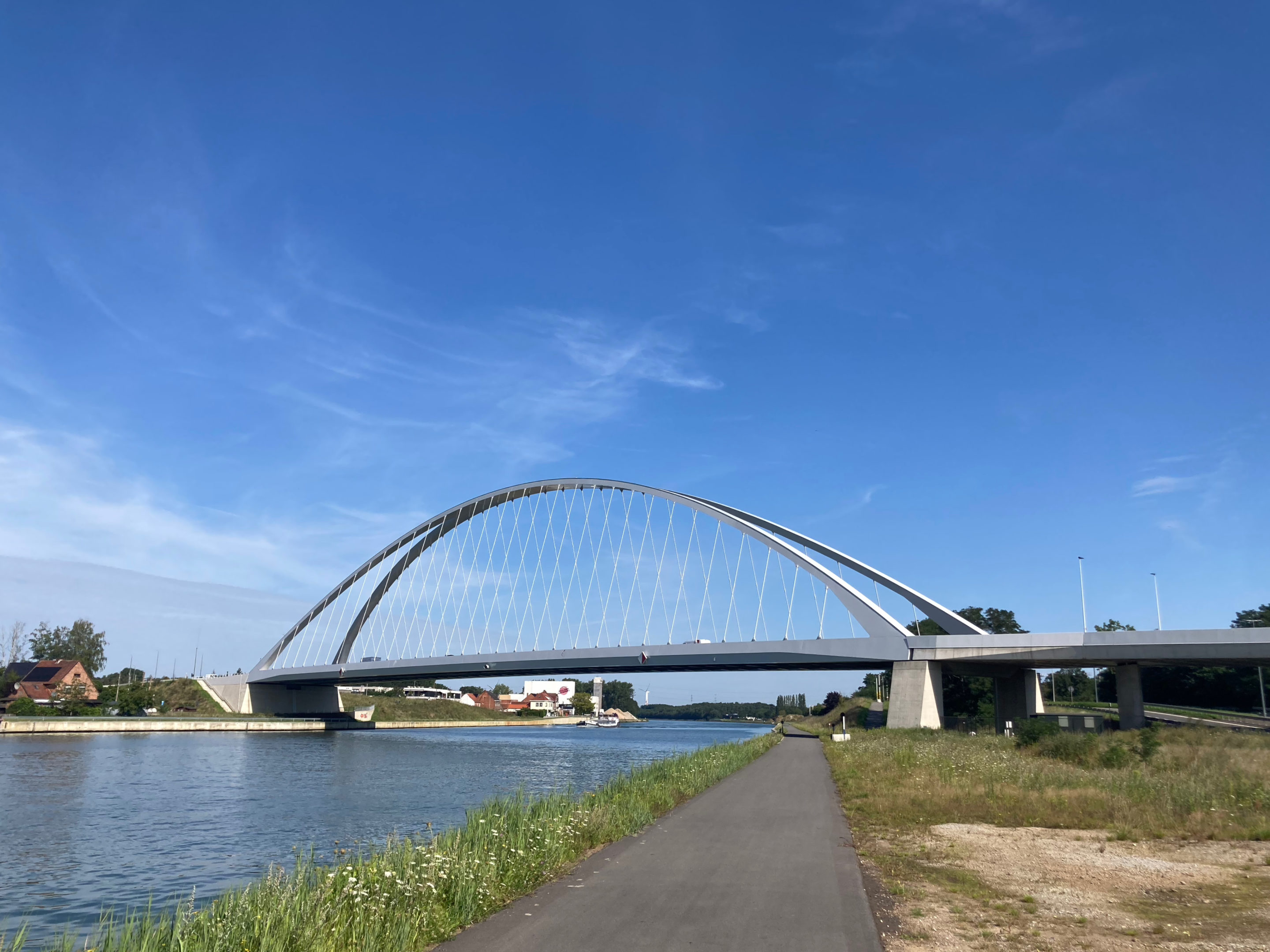
Slowly but surely the canal had been changing direction. From Kwaadmechelen onwards it turns west-northwest. With the hilly land flattening out towards Antwerp this resulted in a strong headwind blowing over the water.
The next point of interest would be Herentals, where I also passed two weeks ago. It was then that I observed how wide the canal actually is. However where the railway crosses the canal, the old bridge restricts the increased width and it is being replaced by a newer version. Interestingly enough the new bridge is being built right next to the old one.
In Grobbendonk I spotted a restaurant enclosed by the trees on the other side of the canal with a jetty for boats to dock on (‘Brasserie Marie‘). The scene looked like a location in the Black Forest. On other places along the canal I also noticed a few water ski clubs and warning signs on the bank. It lends the canal a much more leasurely character, though I do wonder how these different types of use can be combined considering the risks involved.
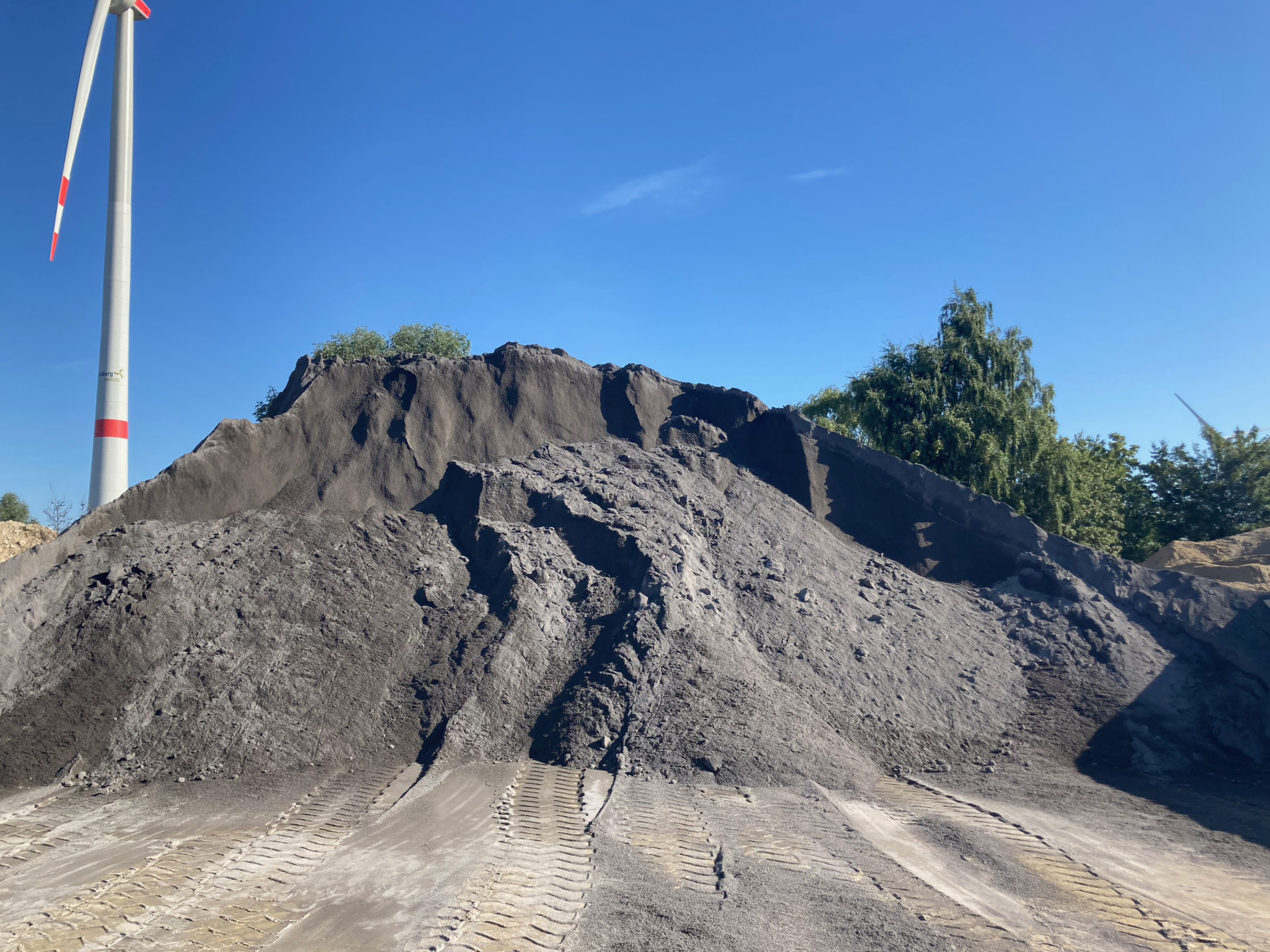
Apropos risks: in some locations the jaagpad leads along sand and gravel storage areas that open up to the path. At one place near Genk I encountered a big shovel backing up across the path and turning into one of the mounds.
What a contrast with the digital display signs in other places that count the number of cyclists passing. It is exactly these contrasts that make me have a soft spot for Belgium. The roads are worse than I am used to, and yet it is remarkable how motorists often let cyclists pass in situations where they have right of way. This kind of courtesy is indeed much rarer in the Netherlands. Ours may be a country of soft rules where everyone constantly negotiates, but as a cyclist you better keep to the bike paths even when they are unsafe—because motorists can otherwise become really unpleasant. Obviously I am always glad to return to the Dutch infrastructure. But the Dutch can learn a thing or two about behaviour in traffic by looking abroad.
At this point the headwind was tiring me and I was looking ahead to my exit north at the canal Dessel-Turnhout-Schoten. Reaching the junction I had another break. I might not be half way but had reached a nice average. For a moment clouds concealed the sun and the temperature dropped. Not for long—when I stopped for a water resupply 15km later the sweat was running down my arms.
The next section of the route was familiar because I went along here in the reverse direction three weeks ago on my trip through Hoogstraten. I passed the huge church of Sint-Lenaarts, and the even more impressive Sint-Katharina church in Hoogstraten. There even was a stretch of new nice asphalted bike path, before it gave way to the usual concrete slabs again.
Mentally I was already closing in on home, but I had still about 100km to go after crossing the border. Only 100km—it depends how you look at it. It helps to focus on kilometers made instead of kilometers to do. I had 170km done.
I passed through the eastern quarters of Breda and enjoyed the trees just outside Oosterhout. After that I crossed the Bergsche Maas in Raamsdonksveer. Until Gorinchem the route ran chiefly next to the motorway, where digital signs displayed a tempo of 50 to prevent congestion. More than once I passed large trucks coming to a stop. Two policemen were performing speed checks on the byroad.
Between Hei- en Boeicop and Vianen I had to lower my pace behind a few tractors. After racing through Nieuwegein and Maarssen I had to slow down out of weariness. But as I reached home I had made the trip of 270km in 10 hours, keeping an average of 27km/h. A personal best on any distance above 210km! 😺